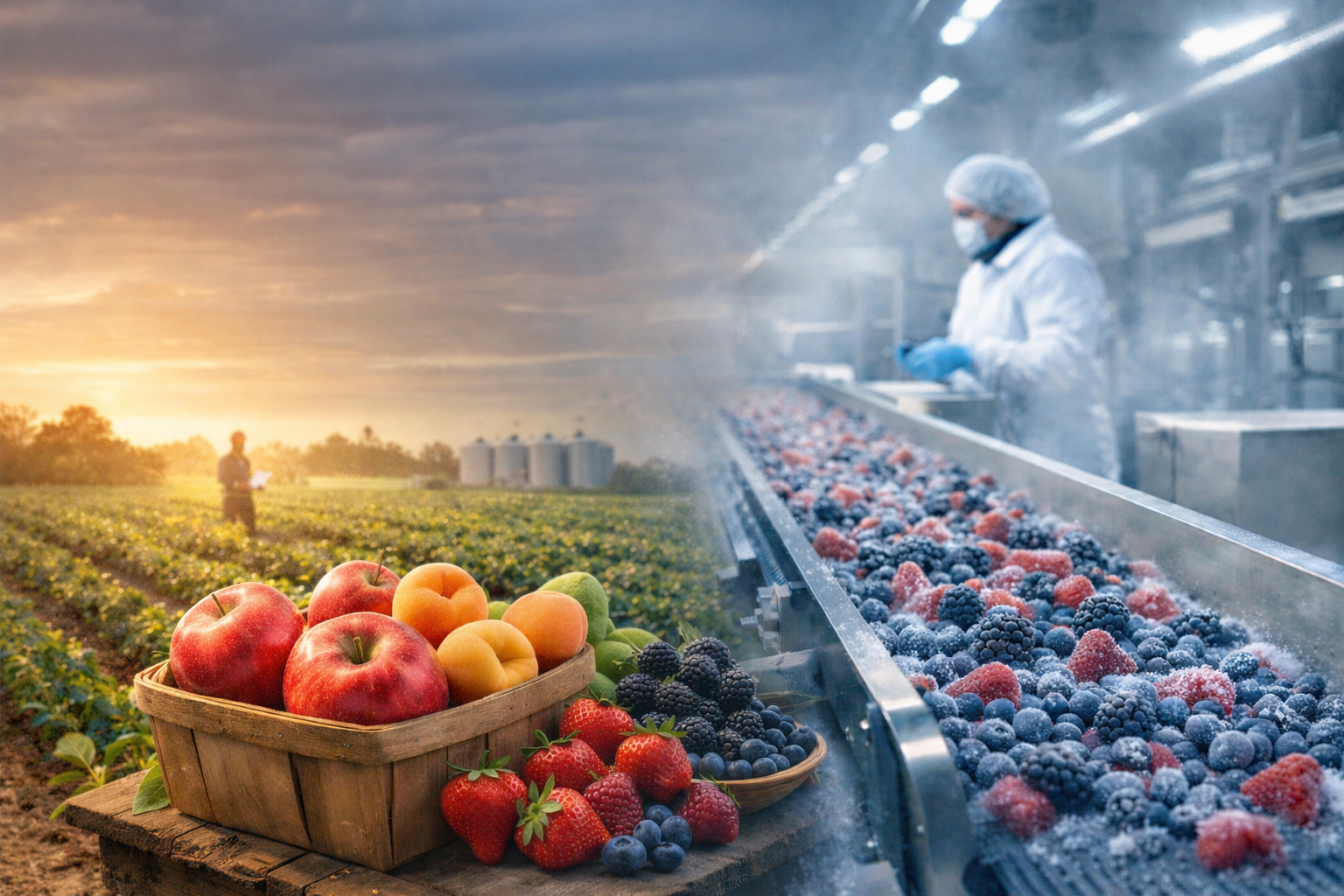
Controlled agricultural practices and careful raw material selection form the foundation of consistent food quality. This approach ensures reliability long before production begins. When sourcing is managed from the field, every step that follows becomes more predictable, traceable, and safe.
Food quality is not something you fix at the end of the line. It is built at the beginning through strict supervision, clear standards, and partners who follow the same discipline season after season.
When sourcing is controlled from day one, quality becomes repeatable. You are not relying on chance, you are building a system.
Field conditions, harvest timing, and raw material handling directly shape what the final product will taste like, how it performs in production, and how stable it stays in storage. That is why controlled sourcing is more than procurement, it is a quality strategy.
Why controlled sourcing matters
When raw materials come from contracted or company managed fields, quality standards can be applied consistently. This allows tighter control over crop health, harvesting decisions, and post harvest handling. It also enables clear traceability, which is essential for food safety and long term trust.
- Stable quality begins with consistent raw material selection and clear field standards
- Better traceability starts at the source, not at the warehouse
- Harvest timing and handling protect structure, flavor, and color
- Controlled sourcing reduces variability and surprises in industrial production
- Stronger supplier relationships improve continuity and accountability
From the field to processing and freezing, a controlled sourcing model supports a supply chain that is transparent and dependable. It helps producers deliver the same result batch after batch, and gives customers confidence that what they receive matches what was promised.